2025 Book Deep-Dive
It's time for the 2025 Book Deep-Dive! This year, I'm adding a note in each book's listing for authors I've read before of how many books of theirs I'd read at the time (including the current), such as RAx3 for "repeat author, third book." This year, all the books were new to me (and three were published this year).
12 non-fiction and 10 fiction this year, with time frequently playing an important role, either in the stories themselves or in the date of publication -- I've additionally noted the three books I read that were published in 2025.
Chronological Order + Notes
Going Infinite: The Rise and Fall of a New Tycoon by Michael Lewis (non-fiction) [RAx3]
A fascinating read about Sam Bankman-Fried (SBF), Alameda Research and the FTX cryptocurrency exchange. Lewis was able to be present for some of the events described, which provides a unique lens. Others have noted that it seems that Lewis is bought in on SBF, but I'm not so sure. And even if it is the case, I think that makes the book all the more interesting. I learned a lot about crypto and what all the fuss was about with FTX a few years ago and am glad I read it. Definitely the first of the time-related books this year, simply because Lewis was able to be there.
The Accidental Billionaires: The Founding of Facebook, a Tale of Sex, Money, Genius, and Betrayal by Ben Mezrich (non-fiction) [RAx2]
This book formed the basis for The Social Network and certainly filled in gaps in the story. That said, while there are definitely some interesting bits here and there, I think this story may be better told in the movie format. There's definitely some "there" there (rather unlike Mezrich's Sex on the Moon) but just wasn't the most helpful book I've ever read.
Dark Matter by Blake Crouch (fiction) [RAx2]
I've learned in recent years that I can really enjoy speculative sci-fi thrillers, and Dark Matter is no exception. There's a lot going on here, and I'd rather not spoil it, suffice to say that time is relevant here, though not in a simple time travel sort of plot. The subject matter is certainly dark at times, but was a fascinating adventure.
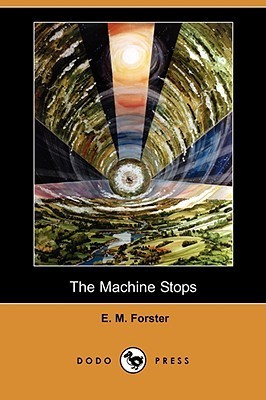
The Machine Stops by E.M. Forster (fiction)
Oh my goodness gracious. This little work is maybe the most prescient thing I've ever read. If you can, try not to learn when it was written before reading it so you can be just as awed as I was (time here is critical!). Fascinating investigation into the role of how we interact with each other in the digital world.
Scarcity: Why Having Too Little Means So Much by Sendhil Mullainathan and Eldar Shafir (non-fiction)
This was easily the driest book of the year that I read, and it was utterly incredible. Study after study, in different populations, with different approaches all started to build a picture at the horrific impact scarcity (real or felt) can have on individuals and societies. Definitely feels like the start of a subfield of research in some ways, with many open questions remaining. If it sounds intriguing, it is definitely worth the time.
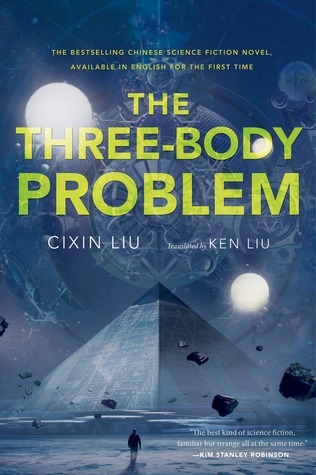
The Three-Body Problem by Cixin Liu, translated by Ken Liu (fiction)
Another speculative sci-fi thriller (shock, I say!). Three-Body has shown up on just about every list I've found when trying to find books I'd like, so I decided to give it a go.
The book was a bit intimidating to me at first, having the story first set in the context of the Chinese Cultural Revolution, a subject I knew nothing about. That said, endnotes from the author and translator were helpful to get the gist of what context I was missing and get back to the story. So kudos to them for that!
This was imaginative, had all kinds of twists, with an anchor to a real physics problem. I enjoyed it, but I do have to reserve a little bit of judgment: this book is the first of a trilogy. Through no fault of the author, I was mistakenly under the impression that Three-Body would stand on its own (like Dave Eggers' The Circle, Orson Scott Card's Ender's Game, or Ernest Cline's Ready Player One). I did manage to read book #2 this year (see below), but I think it would have felt very different had I known at the start that it really is the start of a larger story, not really one that's complete on its own.
And yes, time is once again relevant to the plot, but even more so in the sequel, so we'll talk about it there.
What's Next: A Backstage Pass to The West Wing, Its Cast and Crew, and Its Enduring Legacy of Service by Melissa Fitzgerald and Mary McCormick (non-fiction)
A book that can indeed be judged by its cover. Fantastic read discussing the behind-the-scenes and beyond-the-screen stories from The West Wing. The audiobook was great as it was two familiar voices (plus some cameos!), and was nerdy upon nerdy about a show I love (to the point that my wife and I watched the whole thing this year, her for the first time!). No notes. =)
Dylan Goes Electric!: Newport, Seeger, Dylan, and the Night That Split The Sixties by Elijah Wald (non-fiction)

The Handmaid's Tale by Margaret Atwood (fiction)
After all the hype and all the hate, I finally decided to dive in. It's an interesting world to spend time in, and to compare/contrast with modern times. I didn't feel as though it was the spot-on prediction many claim, nor did I really feel it was the scathing critique others relish, but rather somewhere in-between? I'm still perplexed by the framing of the novel that takes place at the very end.
Sunrise on the Reaping by Suzanne Collins (fiction) [RAx5, new in 2025]
The second prequel in the Hunger Games universe, focused on Haymitch Abernathy. It's a good read, and I look forward to the movie. It's an interesting point in the world of Panem, where the Games have taken root much more like we see in Katniss's time, with a world more removed from Snow's origin in Ballad of Songbirds and Snakes. I was expecting more subversion of the Games for some reason, but it's a good story anyway.
Zap: A Play by Paul Fleischman (fiction)
A fun play, looking at our attention spans, flipping from one story to the next and back. Worth the read, would be fun to see the play. =)
Atmosphere: A Love Story by Taylor Jenkins Reid (fiction) [RAx5, new in 2025]
This is now the fifth Taylor Jenkins Reid novel I've read, so I'm certainly a fanboy at this point. That said, I think Carrie Soto and Daisy Jones remain at the top of my Reid list. The story of (fictional) Joan Goodwin on her path to becoming a Space Shuttle astronaut is great (what's not to love?) but I really thought the subtitle of the book was going to be a hint toward a different surprise love story than it did. The love of the stars. The love of discovery. The love of family, even. It sure felt like that was where the story was going for a while, but that's not where it ended. I also remain unconvinced that someone like Joan, a relatively reserved, careful, professor of physics and astronomy who takes her niece under her wing like something between a big sister and a mother would find the thing that's been missing all her life while inebriated on Bourbon Street at a strip club. Perhaps it would make more sense on a second read, without my own incorrect expectations?
How to Lie with Statistics by Darrell Huff (non-fiction)
Cultish: The Language of Fanaticism by Amanda Montell (non-fiction)
This was a compelling book from start to finish, a look at the role of language in cults (and cult-like groups), with examples from all sorts of places. The title is trying to get at the point that there are a lot of commonalities here -- just as languages like English or Spanish relate to England or Spain, "cultish" relates to cults. Everything from "thought terminating cliches" to the role of shame and belonging are under the microscope. Interesting topic and the style made it a joy to read, even when the subject matter is quite awful sometimes.
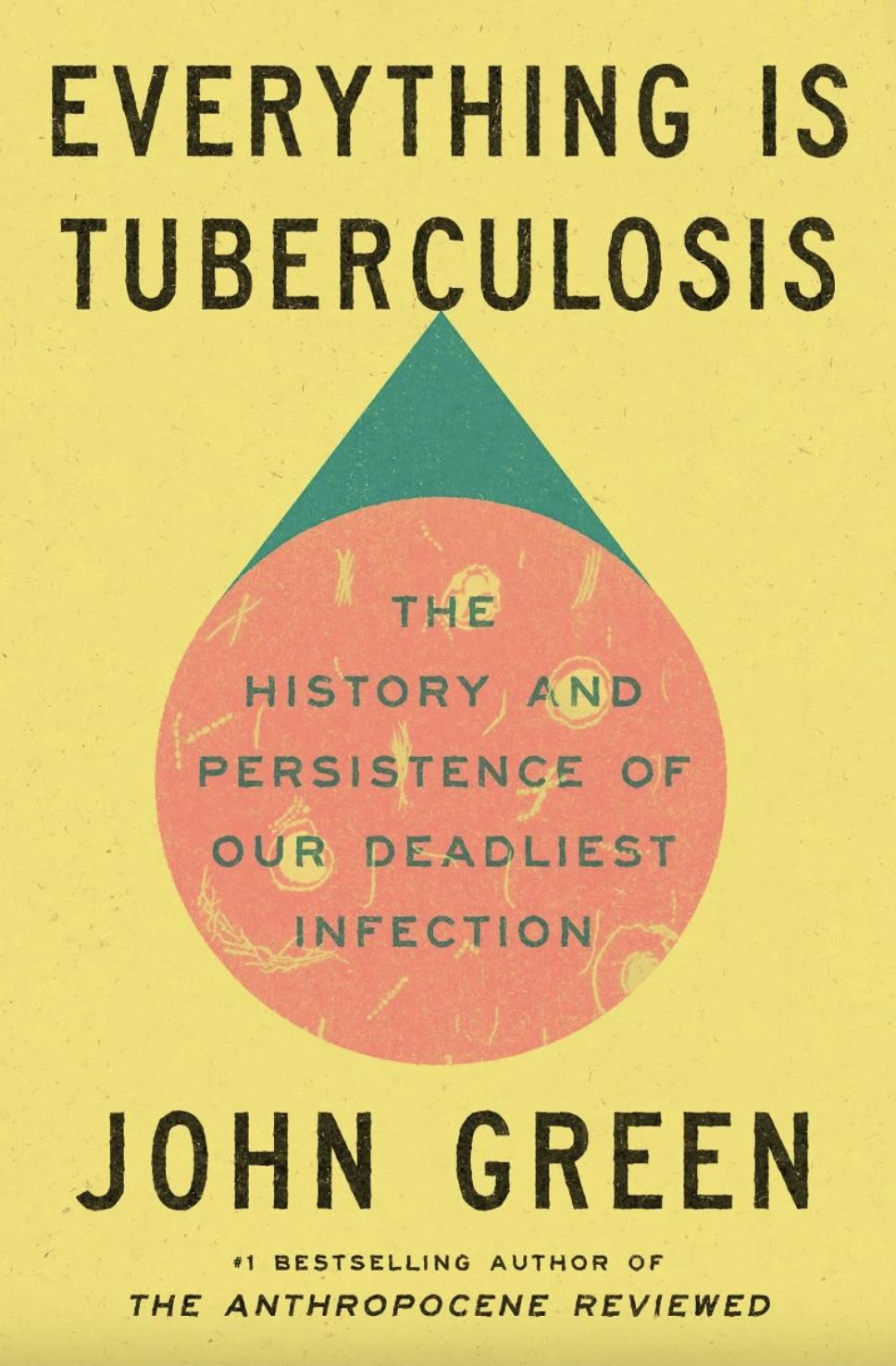
Everything Is Tuberculosis: The History and Persistence of Our Deadliest Infection by John Green (non-fiction) [RAx8, new in 2025]
Definitely a fanboy of John Green. As I got to tell him in person a long time ago, his books got me back into reading.
I was concerned that the book would be nothing more than tear-jerking stories and horrific images of people overcome by disease. While there are some painful stories here and there, I should have given John Green more credit - through the many failings of individuals, companies, countries, and the world at large resulting in more than a million deaths per year from a disease that is (by-and-large) curable, he remains ever the optimist, though not a naive one. I learned so much, and want to learn more. Tuberculosis has had a fascinating effect on the world through centuries, and the story of the disease and those who have lived with it, survived it, or succumbed to it deserves to be told and heard and remembered.
The Bait of Satan: Living Free from the Deadly Trap of Offense by John Bevere (non-fiction)
Oof. This book will wreck you. While I found some of the style a bit grating, this was an incredible back-to-basics look at the role of offense (and to some extent, forgiveness, but that's somewhat secondary). Could it really be the case that taking offence is a deadly trap? Bevere, somewhat frustratingly, makes a very compelling argument that it is. What does it mean to not hold on to offense, and to eschew it at any cost?
The Storm is Upon Us: How QAnon Became a Movement, Cult, and Conspiracy Theory of Everything by Mike Rothschild (non-fiction)
I learned a few things from this book, but I do feel like it suffered from the opposing forces of getting a book out while the topic is still relevant and waiting to get a fuller retrospective picture once the dust settles. Would be worth the read if you're really unfamiliar and want to learn, but if you're already somewhat familiar with the history, may not be worth the time.
How to Keep House While Drowning by K.C. Davis (non-fiction)
A great reflection with tips on how to reframe chores in a way that gets rid of shame. Worth a read!
Ready Player Two by Ernest Cline (fiction) [RAx2]
The sequel to the page-turning Ready Player One returns to the world of The OASIS, with Parzival attempting to solve a new surprise quest. While there was always pressure in the first novel, this one really amps up the stakes -- more difficult tasks, need to solve faster, with bigger risks -- and I'm not sure that made it better. Has a few cool moments, but overall... meh? Ending made me think about The Good Place or Upload and the questions those shows wrestled with, but not sure it really hit home for me.
What Does it Feel Like? by Sophie Kinsella (fiction)
This was heartbreaking. Inspired by the author's real life experience in dealing with a tragic medical condition, it was very real, despite being a fictional telling. Made all the more poignant in learning that the author passed away from the condition in December. You will cry, but it's a good thing.
The Dark Forest by Liu Cixin, translated by Joel Martinsen (fiction) [RAx2]
Oh man. This was a pretty wild ride. This is book 2 of 3 in the "Remembrance of Earth's Past" / Three-Body Problem series. Time now plays a major role -- what does society look like with a 400-year doomsday clock? What is it like to awake from cryosleep in a world you don't recognize? What is the role of deception, belief, and truth when the stakes are at an all-time high? Where is the line between confidence and arrogance? It was a challenge to keep it all straight but was a pretty incredible read. While book 3 looms in my "To Be Read" list, I did feel like this one wrapped up many of the open questions from the first book.
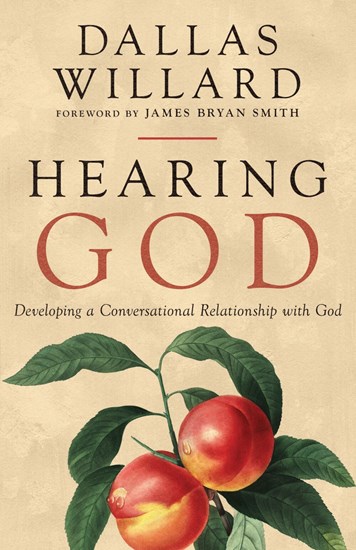
Hearing God: Developing a Conversational Relationship With God by Dallas Willard (non-fiction)
This is phenomenal. This is the first time I'd read anything from Willard (though hopefully I'll add another book or two in 2026!) and I'm so glad I did. Equal parts theological and practical, but so well-considered, kind, hopeful, and substantive. If you're at all intrigued by the title, pick it up, especially the version with the foreword by James Bryan Smith -- that version includes lectio divina exercises throughout to practice hearing God in scripture (not the only way Willard talks about hearing God, but an important one) that are so worth the time.
Totally Official Awards™ 2025 Edition
Most Likely to Read Again: Hearing God by Dallas Willard
Also plan to read again:
- Bait of Satan -- too helpful not to read again
- Scarcity -- so fascinating, worth internalizing some of the conclusions from the research
Honorable mentions:
- The Machine Stops -- it's so ahead of its time, it's worth reading again just to appreciate that
- Dylan Goes Electric! -- there's so much history (music history in particular) here that I want to better appreciate and will likely revisit
- How to Keep House while Drowning -- good tips, worth taking more time to internalize
Not Worth the Calories: Accidental Billionaires by Ben Mezrich
Again, the book itself is fine, I just think it doesn't add enough beyond what's in The Social Network to merit the time (unless it's of particular interest). Still glad I read it though!
Honorable mentions:
Both entries here are really just related to whether you're already interested in the topic. If so, they're worthwhile, but if it's only marginally interesting to you, probably not worth the time investment.
- How to Lie with Statistics
- What's Next
Most Impactful: Scarcity by Sendhil Mullainathan and Eldar Shafir
In part, I didn't want to award Bait of Satan or Everything is Tuberculosis with more than one award, but Scarcity is likely to be incredibly impactful if we pay attention to the work, designing systems that are aware of the effect of scarcity.
Most Challenging: The Bait of Satan by John Bevere

Honorable Mentions:
- The Dark Forest -- the intricacies of the plot with so many characters in different times made it a challenge to follow, plus the central conclusion of "cosmic sociology" (giving rise to the book's title) is a challenging thought indeed
- What Does It Feel Like -- knowing that the fictional story is really largely autobiographical is heartbreaking to the point of wanting to stop reading, but the story is absolutely worth it.
- Hearing God -- asked the question of what you really believe in a powerful way, but was an overall gentler approach to help grow you
Best Value: The Machine Stops by E.M. Forster
No question here, this is so short but so compelling and so impressive. You can actually go read it right here right now: https://standardebooks.org/ebooks/e-m-forster/short-fiction/text/the-machine-stops At roughly 12,000 words, it's easily read in a single sitting.
Most Heartwarming: Everything is Tuberculosis by John Green
I debated this one, but I think it's deserved. While there is much to mourn and there are so many challenges, there are stories of hope, of change, of a great turning of the tide, even if it's only a few people at a time.
Honorable Mention: What's Next -- just for all the feel-good stories baked in.
Too Early Bird: The Storm is Upon Us by Mike Rothschild
(The only new award this year!) Again, I think a couple more years of looking back could have been helpful here and made the book much better.
Honorable Mentions:
- The Machine Stops -- again, you'll be amazed how far back this was written, as much of the invented technology is commonplace today. That said, it's really not "too early" just impressive.
- Going Infinite -- like The Storm is Upon Us, I do wonder if a bit of additional hindsight would have helped wrap things up, but it works well to be contemporaneous, and maybe makes it even more interesting.
Comments
Post a Comment